Skip to content
India +91 86109 37932sales@beta-bags.com
LinkedInISO Class 7 cleanroom · CoA + CoC every batch
Request samples
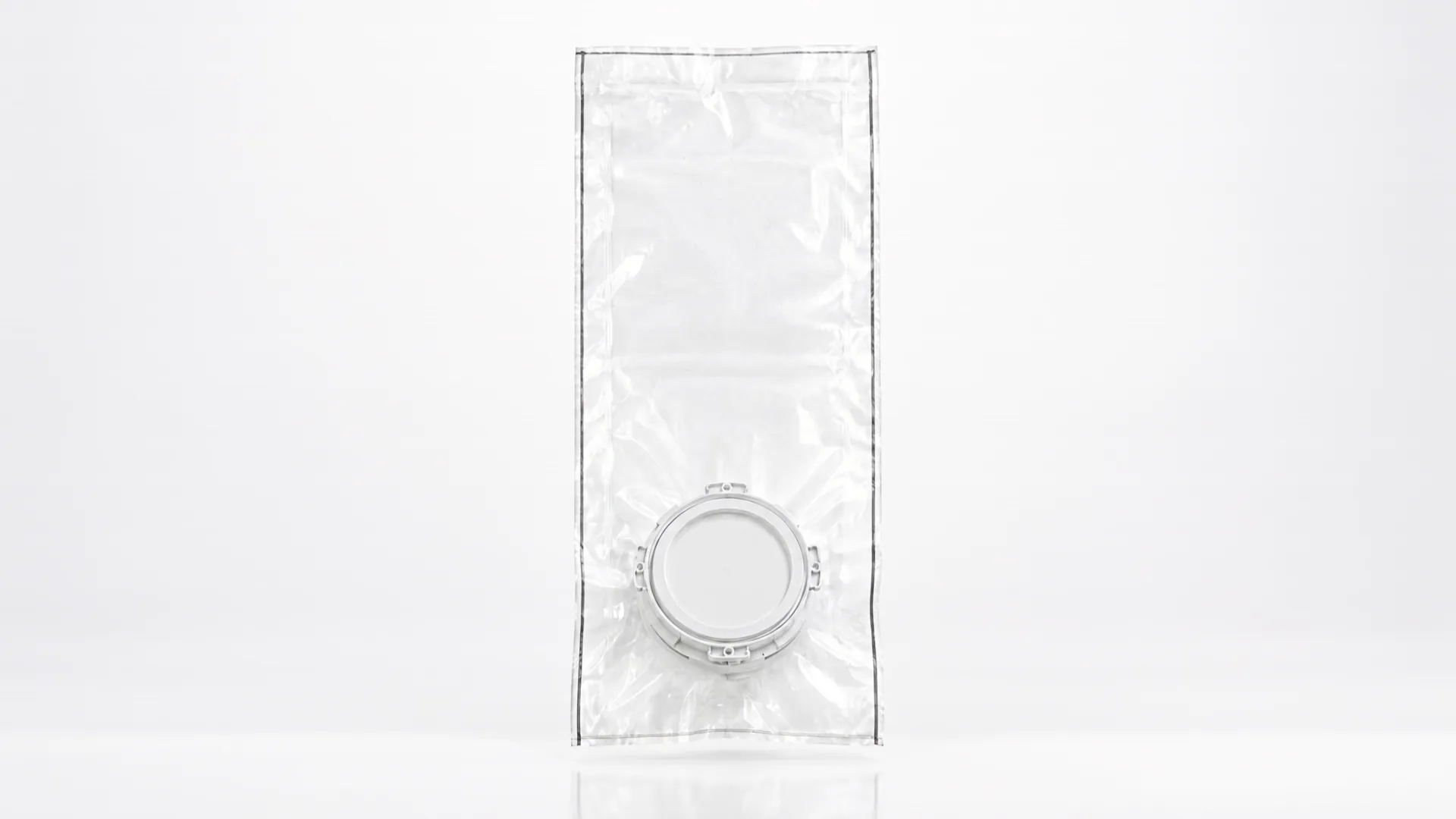
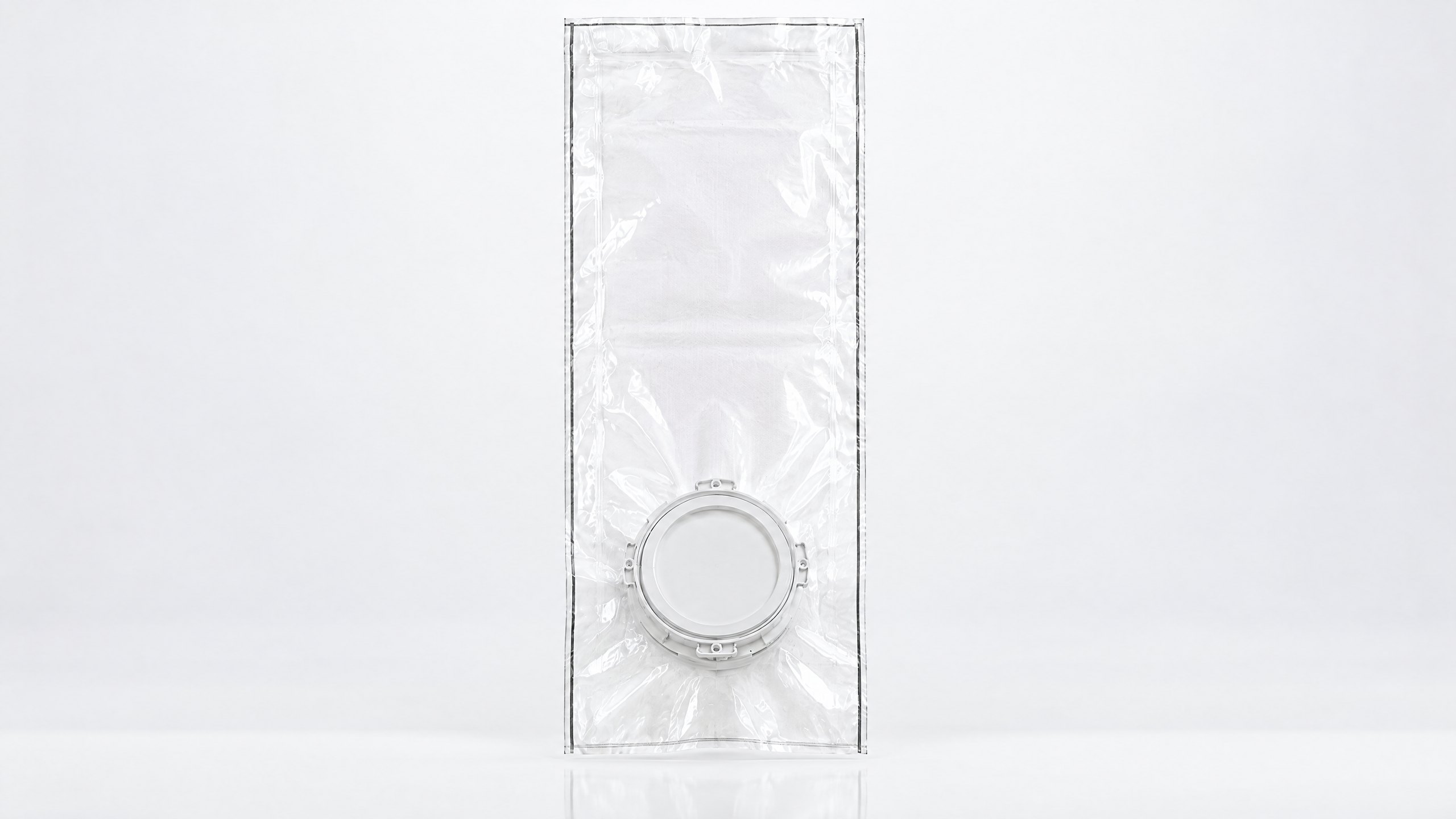
The DELTAQUANT single-use beta bag on a white sweep, the pouch lengthening from 10 L to 25 L while the 190 mm flange stays fixed in its face

Products

190 mm beta bags. Empty, or pre-loaded.

Two product lines, Empty beta bags and Pre-loaded beta bags, each in two varieties, indA (autoclavable) and indB (gamma pre-sterilised), and two standard volumes, 10 L and 25 L, fully customisable.

Two standard volumes

10L useful volume
Scroll

Two product lines

Empty, or pre-loaded.

A 190 mm beta bag is a flat pouch with a rigid beta flange sandwiched into its face. The flange docks to industry-standard 190 mm alpha ports; the pouch carries whatever has to cross the sterile boundary. DeltaQuant makes this single-use beta bag in two lines. Both share the same flange, the same two varieties and the same two volumes, so a choice made for one line carries over to the other.

Product line

Empty beta bags

You fill them, in your process

Ø 190 ± 0.4 mm

An empty, ready-to-use transfer bag the customer fills in their own process. Available in every variety, volume and port option.

Empty beta bags: availability by variety and volume
Variety10 L25 L
indA
Autoclavable
AvailableAvailable
indB
Gamma sterile
AvailableAvailable
Max load5 kg TBC to be confirmed7 kg TBC to be confirmed

TBC · max load to be confirmed

Compatible with industry-standard 190 mm alpha ports. Custom sizes on request (engineering review).

Configure Empty beta bagsDouble-bag configuration

Product line

Pre-loaded beta bags

Your components, loaded in our ISO Class 7 cleanroom

Ø 190 ± 0.4 mm

We load the customer's components into the bag in our ISO Class 7 cleanroom so they arrive ready to transfer.

Pre-loaded beta bags: availability by variety and volume
Variety10 L25 L
indA
Autoclavable
AvailableAvailable
indB
Gamma sterile
AvailableAvailable
Max load5 kg TBC to be confirmed7 kg TBC to be confirmed

TBC · max load to be confirmed

Component types

Rubber stoppersTwist-off portsAluminium seals & flip-off capsPlungersOther components

Agreed per kit with you

Units per bagSterilisation routeValidation

Sterilisation route: agreed with you. Loaded in our ISO Class 7 cleanroom.

Configure Pre-loaded beta bagsDouble-bag configuration

Empty beta bags

You fill them, in your process. An Empty beta bag is a ready-to-use transfer bag that your own team loads: stoppers, tools, sampling equipment, product containers, waste. It is available in every variety, volume and port option. indA is loaded, then autoclaved in your validated cycle. indB arrives gamma sterile, ready to use. Every Empty bag is compatible with industry-standard 190 mm alpha ports, and custom sizes are made on request after an engineering review.

Configure an Empty beta bag in the studio, or request samples to check the fit on your own port.

Pre-loaded beta bags

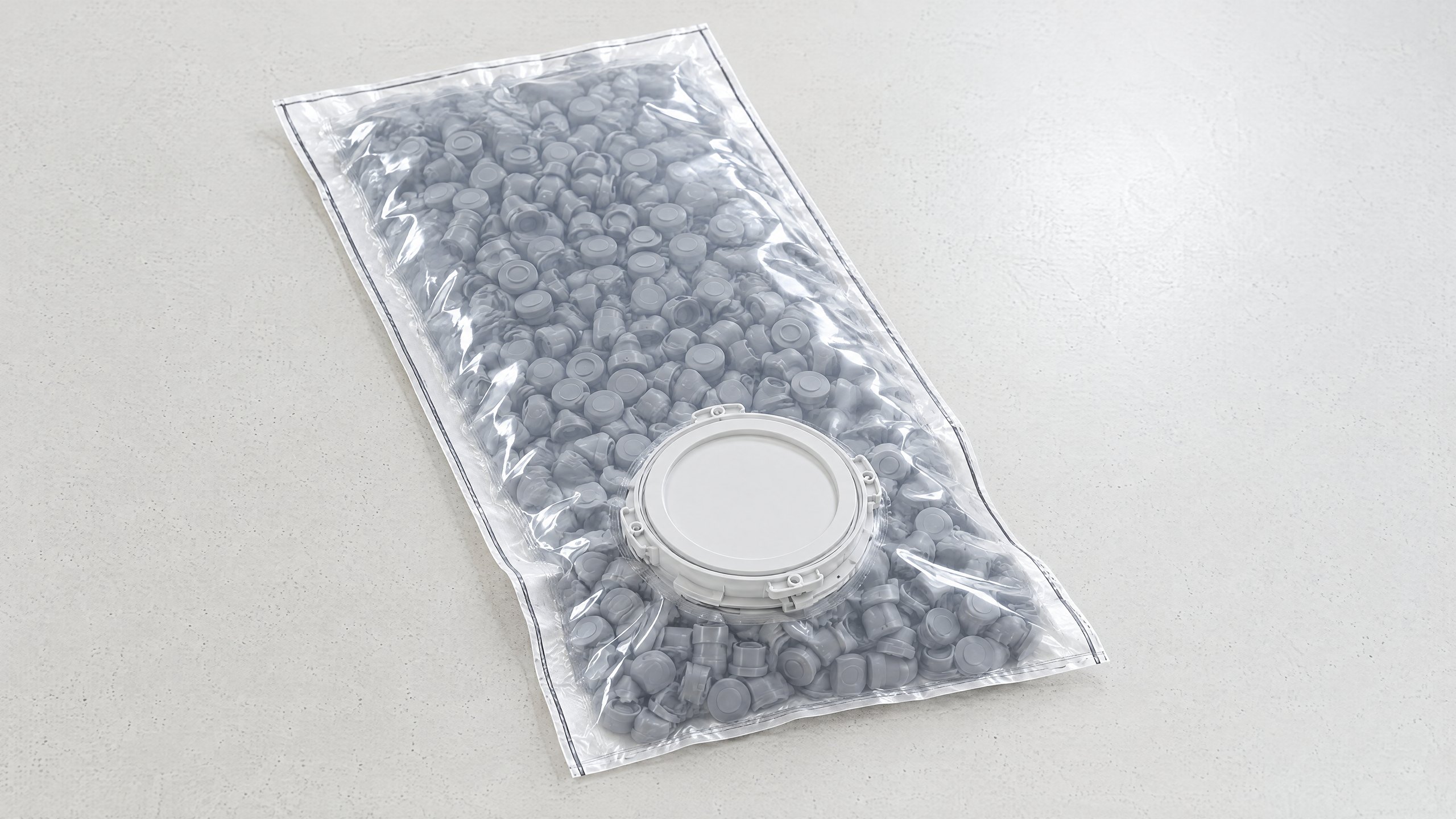
Your components, loaded in our ISO Class 7 cleanroom. We load rubber stoppers, twist-off ports, aluminium seals and flip-off caps, plungers, or other components that you supply or we source, so the bag arrives ready to transfer. Units per bag, the sterilisation route and the validation are agreed per kit with you. None of them is published as a fixed figure, because each kit is different.

Component makers use the same line to ship ready-to-transfer parts to their pharmaceutical customers. Configure a Pre-loaded beta bag, then request a quotation; sales replies within one business day.

Two varieties

Autoclave it, or unwrap it.

indA and indB are the same bag with two routes to sterility. indA is supplied non-sterile: you run one validated autoclave cycle at 121 °C for 30 min and keep the bag for up to 3 years from manufacture. indB is supplied pre-sterilised by gamma irradiation at 25–40 kGy to SAL 10⁻⁶, released dosimetrically per batch, with a 2-year shelf life and no preparation.

indA · AutoclavableCycle 1 of 1

You run the cycle.

Chamber

121°C · band 121–123 °C

Hold

30:00min

Vacuum ramp

0.00bar/min · ≤ 0.5

Indicator dot

UnprocessedISO 11140-1 Class 1

Supplied non-sterile · you control the cycle · 3-year shelf life

Side by side

indA · AutoclavableindB · Gamma sterile
Supply stateNon-sterilePre-sterilised
SterilisationCustomer autoclave, 121 °C / 30 min, one cycleGamma, 25–40 kGy, SAL 10⁻⁶
PreparationOne validated autoclave cycleNone, ready to use
Shelf life3 years from manufacture2 years from manufacture
Best forIn-house autoclave, control over timingZero preparation

Choosing between them

Choose indA when you have an in-house autoclave and want control over timing: the bag is loaded in your process and sterilised with its contents in one cycle. Keep the chamber within 121–123 °C, since 124 °C or more may damage the bag; limit the vacuum ramp to 0.5 bar/min; lay the bag flat with the porous face down; respect the load limit; run one cycle only. A steam indicator dot (ISO 11140-1 Class 1) on the bag serves as the process indicator. You validate the cycle; an autoclave compatibility statement and a post-autoclave inspection protocol are available from Proof & Documents.

Choose indB when you want zero preparation. Gamma compatibility is verified to 40 kGy and a sterility audit looks for no growth over 14 days; the method and acceptance criterion of each test are on the Proof page, and measured values appear once a batch report carries them.

Storage, both varieties

Both varieties are stored at 13–27 °C and 30–60 % relative humidity, away from sunlight, ozone and heat. Each bag is overwrapped and tamper-evident sealed, and the carton carries the lot, the configuration and the dates, so the remaining shelf life can be read without opening the pack.

Still deciding? Set either variety in Build Your Bag and compare the spec cards, or request samples of both for your own port.

Applications

Wherever the barrier matters.

Nine applications, each with a recommended line, variety and volume. Every card opens the configurator with that recommendation set, and every application has its own page with the reasoning behind it.

Aseptic fill-finish

Sterile product and components into the filling isolator without breaking the barrier.

Recommended

EmptyindB10 L

Sterile API powder

Controlled movement of active ingredient into the closed process.

Recommended

EmptyindB10 L

Component makers

Ship ready-to-transfer stoppers, seals and ports to your pharma customers.

Recommended

Pre-loadedindB25 L

Every card opens the configurator with its recommendation set. The reasoning behind each recommendation is on the application pages, written for the people who run the line: aseptic fill-finish; sterile API powder; lyophilisation trays; vial, syringe and stopper loading; aseptic waste removal; components into RABS; cleanroom staging; environmental monitoring and sampling; and component makers.

How it is built

A pouch, a flange, eight parts.

The bag is a flat pouch. Two faces are welded together around the edge: a clear, impervious multilayer LLDPE film and a white, breathable Tyvek® flash-spun HDPE microbial barrier. The barrier face is tested to ASTM F1608, acceptance criterion LRV ≥ 4.

The rigid round beta flange, Ø 190 ± 0.4 mm in high-temperature polycarbonate, is sandwiched into the face of the pouch at its lower-middle, with pouch material above, below and to both sides of it. Its flat cover, also polycarbonate, faces outward. The beta seal is platinum-cured LIM silicone, the O-ring platinum-cured silicone and the weld ring HDPE; all three are product-contact parts. A removable stainless-steel pull handle is optional and never touches the product. That is all eight parts; every contact material is listed in the anatomy chapter below.

Held by the flange, the pouch hangs flat in front of the operator. At the port, the flange engages the alpha port, a short turn locks it, and the alpha door and the beta cover become one plate that swings inward. Contents pass through; the door closes; the bag turns back and comes away with its cover sealed again. The bag is supplied in a double-bag configuration, overwrapped and tamper-evident sealed; the carton carries the lot, the configuration, the dates and a QR-coded GTIN.


The anatomy

Every part. One boundary.

0of 8 parts
01Beta flange· High-temperature polycarbonate
02Cover· High-temperature polycarbonate
03Beta seal· Platinum-cured LIM silicone
04O-ring· Platinum-cured silicone
05Weld ring· HDPE
06Outer porous film· Tyvek® flash-spun HDPE microbial barrier
07Inner impervious film· Multilayer LLDPE
08Pull handle (optional)· Removable stainless steel, non-contact

Spec card

FlangeØ 190 ± 0.4 mm
Port compatibilityCompatible with industry-standard 190 mm alpha ports
ConfigurationDouble-bag configuration
Multi-connectUp to 5 dockings
Storage13–27 °C · 30–60 % RH

The lens

Look inside.

Move the cursor over the bag

Under the lens

Outer film

The object

Drag to turn.

Ø 190 ± 0.4 mm flange

Port compatibility

Standard, or interlock chamfer.

Every 190 mm beta bag is compatible with industry-standard 190 mm alpha ports. The Standard version fits standard ports; the Interlock-chamfer (IC) version is made for chamfered alpha ports. If you are not sure which you have, give us the alpha port model on the request form and engineering confirms the right flange before anything ships.

The bag is single-use but multi-connect: it is rated for up to 5 dockings. Alpha-port docking and multi-cycle docking are verified by in-house methods with no barrier loss and up to 5 dockings as the acceptance criteria, and the cover removal force is accepted at ≤ 30 N. Measured values appear on the bench once a batch report carries them. The checks are on Proof & Documents; the simplest check of all is a sample on your own port: request samples, or build your bag first and send the configuration with the request.

Questions buyers ask

Twelve questions, answered from the data.

The questions QA, validation, production and procurement teams ask before a first order, answered in plain language. Every figure comes from the verified technical data behind this site; where a value is not yet published, the answer says so. For anything else, talk to the transfer specialist or ask engineering.

What is a DELTAQUANT single-use beta bag, and which alpha ports does it fit?

It is a flat pouch with a rigid 190 mm beta flange sandwiched into its face. The flange docks to industry-standard 190 mm alpha ports on isolators, RABS and filling lines, so components, product or waste cross the sterile boundary without opening it. The flange measures Ø 190 ± 0.4 mm and the bag is supplied in a double-bag configuration. An Interlock-chamfer (IC) version fits chamfered alpha ports. Custom sizes are possible after an engineering review.

indA or indB: what is the difference?

indA is supplied non-sterile and autoclaved by you: one validated cycle at 121 °C for 30 min, with a 3-year shelf life. indB is supplied pre-sterilised by gamma irradiation at 25–40 kGy to SAL 10⁻⁶, released dosimetrically per batch, with a 2-year shelf life and no preparation. Choose indA when you have an in-house autoclave and want control over timing; choose indB when you want zero preparation.

How do I autoclave an indA beta bag?

Lay the bag flat with the porous face down and run one validated cycle at 121 °C for 30 min. Keep the chamber within 121–123 °C; 124 °C or more may damage the bag. Limit the vacuum ramp to 0.5 bar/min, respect the load limit of the size you use, and run one cycle only. A steam indicator dot (ISO 11140-1 Class 1) on the bag serves as the process indicator. You validate the cycle; an autoclave compatibility statement and a post-autoclave inspection protocol are available on request.

How is the indB beta bag sterilised and released?

indB bags are gamma irradiated at 25–40 kGy to a sterility assurance level of 10⁻⁶ and released dosimetrically, batch by batch. Gamma compatibility is verified to 40 kGy and a sterility audit looks for no growth over 14 days; the method and acceptance criterion of each test are listed on the Proof page, and measured values appear only once a batch report carries them. The bag arrives ready to use: unwrap, dock, transfer.

What is the shelf life, and how should the bags be stored?

indA has a 3-year shelf life from manufacture; indB has a 2-year shelf life from manufacture. Store the bags at 13–27 °C and 30–60 % relative humidity, away from sunlight, ozone and heat. Each bag is overwrapped and tamper-evident sealed, and the carton carries the lot, the configuration, the dates and a QR-coded GTIN, so the remaining shelf life can be read without opening the pack.

How many times can one beta bag be docked?

The bag is single-use but multi-connect: it is rated for up to 5 dockings to the alpha port. Multi-cycle docking is verified by an in-house method with up to 5 dockings as the acceptance criterion, and alpha-port docking with no barrier loss as the criterion; the measured results appear on the Proof page once a batch report carries them. After its last docking the bag is discarded, never cleaned and reused.

Which volumes are available, and can I have a custom size?

Two standard volumes: 10 L and 25 L useful volume, both on the same 190 mm flange and both available in indA and indB, Empty or Pre-loaded. The maximum load for each size is shown on the product cards. Other sizes are made to order after an engineering review: tell us the port, the contents and the volume you need, and engineering confirms what is possible before a quotation is prepared.

Standard or interlock-chamfer port: which do I need?

The Standard version fits standard 190 mm alpha ports. The Interlock-chamfer (IC) version is made for chamfered alpha ports. If you are not sure which you have, give the alpha port model on the request form and engineering confirms the right flange before anything ships. Samples let you check the fit on your own port, with your own line, before you order.

Can DeltaQuant pre-load my stoppers, plungers, seals or caps?

Yes. The Pre-loaded line is loaded with your components in our ISO Class 7 cleanroom so they arrive ready to transfer: rubber stoppers, twist-off ports, aluminium seals and flip-off caps, plungers, or other components you supply or we source. Units per bag, the sterilisation route and the validation are agreed per kit with you, so none of them is published as a fixed figure. Configure a kit in Build Your Bag and request a quotation.

What is tested on every bag and every batch before release?

Every bag passes a 100 % flange leak test by pressure decay at 5 in. H₂O for 60 s and a 100 % visual inspection; dimensions are inspected to AQL 0.65. Every batch is tested for bioburden (≤ 1000 CFU/bag, ISO 11737-1), endotoxin (< 0.25 EU/mL, USP <85>), particulates (≤ 20/mL at ≥ 10 µm and ≤ 3/mL at ≥ 25 µm, USP <788>) and weld strength. Nothing leaves untested.

Which documents ship with the batch, and which are available on request?

A certificate of analysis and a certificate of conformance (CoA + CoC) ship with every batch. On request, and sent with your quotation: an autoclave compatibility statement for indA, a post-autoclave inspection protocol, load-pattern guidance, an extractables summary, and the validation package under a mutual NDA. Material compliance covers USP <87> / <88> Class VI, ISO 10993-1, FDA 21 CFR 177.1580 / 177.2600 / 177.1520, BSE/TSE (EMA/410/01), REACH / RoHS and Ph. Eur. 3.1.5.

How do I get samples or a quotation, and how quickly?

Use the request form: choose samples, a quotation or a question, tell us the application, the alpha port and the volume, and sales replies within one business day. A configuration built in Build Your Bag travels with the request. No prices are published; the quotation is prepared for your configuration and quantity. For anything urgent, write to sales@beta-bags.com or talk to the transfer specialist on any page.

Where next

Build it, then try it.

Configure line, variety, volume, port and kit in the studio, then request samples of the single-use beta bag on your own alpha port. One form, one business day. The tests behind every figure on this page, and the documents that travel with the bag, are on Proof & Documents.